
Struggling with CPAP: what can you do?
An uncomfortable mask, a blocked nose, a feeling of pressure or disturbed sleep: difficulties with CPAP deserve a personalised review. The aim is to understand what is stopping you from using it, look at possible adjustments and, depending on your assessment, discuss other sleep apnea treatments.
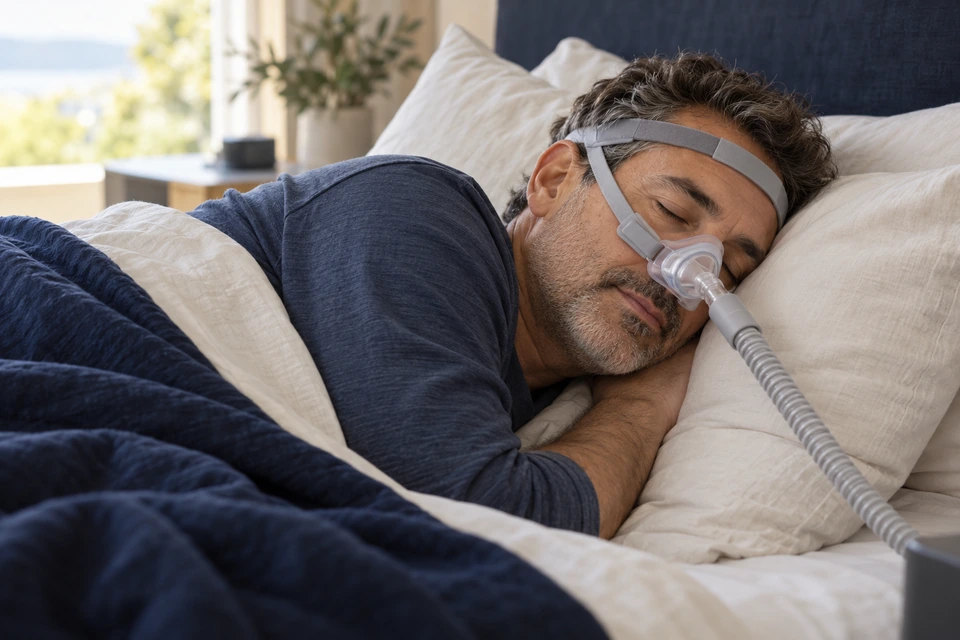
CPAP (continuous positive airway pressure) keeps the airway open with air pressure delivered during sleep.
Understanding what gets in the way of treatment
Difficulties may involve the mask, air leaks, dryness, nasal blockage, a feeling of pressure or anxiety about wearing the device. They can appear from the first nights or after a period of use.
Describe what bothers you and when: at bedtime, during the night or on waking. This information helps the professionals who follow you look for suitable solutions. 1
What should be reviewed with the professionals who follow you?
Comfort, device data and how you feel complement each other. The review covers in particular hours of use, leaks, residual breathing events reported by the device and how your symptoms are evolving.
The mask, humidification and settings can be reviewed with the team that manages your CPAP. Support during adaptation is also part of care.
Persistent fatigue also deserves investigation, even when you use your device: several factors may be involved. 1
What is the role of the ENT assessment?
At Shalvina, the consultation with Dr Marc Boukhris combines a review of your situation and your tests with a complete and thorough ENT examination.
Examination of the nose, mouth and throat looks for anatomical factors that may contribute to breathing difficulties or make treatment harder to use. An identified nasal obstruction may, for example, lead to discussing targeted treatment.
This assessment connects your anatomy, your sleep test results and your experience of treatment to inform decisions. 2
Which alternatives to CPAP can be discussed?
Depending on the severity of sleep apnea, your anatomy, your health and your preferences, several options may be considered:
- A custom mandibular advancement device, which moves the lower jaw forward during sleep. Its medical indication, dental feasibility and a check of its effectiveness are part of the assessment.
- Positional therapy, when breathing problems depend sufficiently on sleep position.
- Surgical treatment, for selected situations after an appropriate assessment.
Measures concerning weight or lifestyle can complement the strategy when relevant. The options chosen and their limits are explained before deciding on the next steps. 2 3
How are the next steps organised and the result checked?
You receive a personal explanation of the conclusions, a written medical report and a plan for the next steps.
Follow-up takes account of your tolerance, actual use of the treatment and its effectiveness. When a treatment is changed or replaced, how it will be checked is agreed with the professionals involved.
If you have already stopped using your CPAP, tell your doctor so that your care can be organised. Any change in treatment is decided with the doctor who follows you.
If you feel sleepy at the wheel, do not drive and seek medical advice promptly.
Which documents should you bring to the consultation?
Prepare the reports of your sleep tests, information about your device and mask, and any usage data available. Also bring documents about treatments you have already tried.
Note your main difficulties and the adjustments already tried. This will allow the appointment to focus on your situation and the decisions that matter.
Finding your CPAP hard to use?
Review your situation with Dr Marc Boukhris to understand your difficulties and discuss suitable care.
Scientific references
-
Patil SP, Ayappa IA, Caples SM, et al. Treatment of Adult Obstructive Sleep Apnea with Positive Airway Pressure: An American Academy of Sleep Medicine Clinical Practice Guideline. Journal of Clinical Sleep Medicine. 2019;15(2):335–343. doi: 10.5664/jcsm.7640. View the publication.
-
Chang JL, Goldberg AN, Alt JA, et al. International Consensus Statement on Obstructive Sleep Apnea. International Forum of Allergy & Rhinology. 2023;13(7):1061–1482. doi: 10.1002/alr.23079. View the publication.
-
Department of Veterans Affairs / Department of Defense. Management of Chronic Insomnia Disorder and Obstructive Sleep Apnea. Clinical Practice Guideline, version 3.0, 2025. Provider Summary. View the guideline (PDF).